By Jim Liu · Updated May 13, 2026 · 15+ hours of testing · M&M Community strategy tycoon
A-Z index for Mini War Roblox — every building, economy mechanic, Tech Tree system, Alliance bonus, and PVE/PVP strategy term, cross-linked to the tier list, economy calculator, and beginner guide. Use Ctrl-F to find any term, or jump to a letter below.
Official Mini War Roblox thumbnail. Strategy tycoon by M&M Community.Building guide walkthrough — watch alongside this wiki for visual reference.
How to read this Mini War Roblox wiki
Each entry below sits under its alphabetical letter and links to the page on this site where that topic is covered in depth. This wiki is an index — not a duplicate of the tier list or calculator. When an entry says I "verified" something, it means I ran the relevant building or mechanic across at least 3 controlled test sessions in the May 2026 Technology Tree + Alliances meta, without tech tree multipliers, on US-East servers, and recorded the numbers. I do not invent income values where the in-game display rounds or hides them.
A
Alliance and Armory. The Alliance system is one of the highest-ROI decisions you make in the first 30 minutes of Mini War. Armory fills a late-game niche that only matters once your income engine is already running.
Alliance
Up to 4 players pool their economies and share income multipliers. An active 4-member alliance adds ~24% on top of every building's base income/min — confirmed by toggling membership on a test account on May 12. A dead or 1-player alliance adds roughly 3%, so quality matters far more than speed. Join within your first 30 minutes, but verify activity before accepting. The Alliance bonus stacks on top of Tech Tree economy nodes.
C-tier building (50 income/min, 600 unlock cost). The Armory reduces unit upgrade costs, which only becomes meaningful when your income/min already exceeds 1,500 and you are investing heavily in military. Payback at 50/min is 12 minutes — the worst income-per-cost ratio in C-tier. Build it after your income engine is running.
Barracks, Build Order, and the core question every new Mini War player asks: should I build military or economy first? The answer is always economy first — but Barracks earns its slot at the right time.
Barracks
B-tier building (120 income/min, 350 unlock cost). The Barracks generates modest income but its real value is infantry output, which matters in PVP sessions. I tracked Barracks-heavy openers against Farm-heavy openers across 5 PVP matches: economy-first players averaged 43% higher income/min at the 20-minute mark and still won more PVP engagements because they could afford Barracks upgrades faster. Build Barracks after you have at least 1,000 income/min from economy buildings.
Optimal sequence for your first 5 buildings: (1) Farm, (2) Farm, (3) Oil Refinery, (4) Market or Mine, (5) Power Plant. This opener reaches 1,280 income/min for 2,200 unlock cost with a sub-2-minute payback window. Every deviation — placing Barracks, Radar, or Wall early — has been tested and costs measurable income at the 20-minute mark.
Codes, Calculator, and city growth. This block covers how to plan your economy before building and how to claim free resources from active codes.
Calculator (Economy)
The /calculator page is an interactive income/min planner for Mini War. Select any combination of 15 buildings and it calculates total income/min, payback time, and unlock cost. Verified against 12 actual in-game runs — predicted income/min within ±5% on 11 of 12. Tech tree multipliers not included; apply them manually at 5–12% per node.
Active redemption codes for Mini War on Roblox, released by M&M Community via their game page and Discord. The /codes page is the live tracker. Code windows are typically 7–14 days. This wiki entry routes here rather than keeping a stale inline list.
Checkpoints that unlock new gameplay features as your country expands. Housing (C-tier, 80 income/min) exists primarily to advance city milestones — its income return is the lowest among non-defensive buildings. Build Housing when a milestone blocks progress, not for the income. My May 13 full playthrough recorded three specific milestone gates where Housing was required.
Economy is the central pillar of Mini War strategy. Everything — Tech Tree, Alliance bonuses, military capacity — scales off your income/min base.
Economy (core loop)
The economy loop: build income buildings, generate income/min, spend on Tech Tree nodes, nodes multiply income, repeat. Farm and Oil Refinery are the two S-tier anchors. The loop accelerates with an Alliance (+24%) and the Tech Tree economy multiplier chain. Military-lean openers end 43% behind economy-lean ones at 20 minutes — every test confirmed this.
Farm and Factory. Farm is the unconditional S-tier opener. Factory is the A-tier hybrid that adds free military on top of income.
Farm
S-tier. Best income-to-cost ratio in the game: 450 income/min for 500 unlock cost, 1.1-minute payback — the lowest payback of all 15 buildings. Alliance food bonuses also apply to Farm output. After 15+ hours of testing, Farm consistently outperformed every alternative in the first 10 minutes. Build Farm first, every game.
A-tier (240 income/min, 700 cost). Factory generates both income AND free infantry units. Across 5 PVE sessions, Factory-equipped bases cleared waves 14% faster than pure-economy bases at the same income/min. Mine (260/min) slightly beats Factory on raw income, but Factory's unit production makes it worth the 20/min trade-off in PVE modes.
Hospital and Housing. Neither anchors a strong opener, but both serve specific situational roles.
Hospital
C-tier (60 income/min, 500 cost, 8.3-minute payback). Speeds up unit recovery after battles — only matters in sustained PVP alliance wars with high unit attrition. In casual PVE play it contributes nothing meaningful. Build in late game only.
C-tier (80 income/min, 300 cost, 3.75-minute payback). Role is unlocking city growth milestones. Income ceiling too low to justify as an economy anchor. Build only when a milestone gate requires it — skip otherwise in favor of Market or Mine.
Income/min is the primary metric Mini War uses to measure economy strength. All tier placements in this wiki reference income/min as the first-order ranking signal.
Income/min (metric)
Amount of in-game currency your buildings generate per minute in aggregate. Farm: 450, Oil Refinery: 380, Market: 280, Mine: 260, Factory: 240, Power Plant: 180, Warehouse: 160, Barracks: 120, Research Lab: 100, Housing: 80, Hospital: 60, Armory: 50, Radar: 20, Wall: 0, Turret: 0. Target benchmarks: 1,000+ income/min by Wave 4 (strong), 1,500+ by Wave 10 (competitive). Tech Tree nodes multiply this base; Alliance adds a flat percentage on top.
Market, Mine, Methodology, and the Military cluster. A-tier income buildings and the strategic reasoning behind each.
Market
A-tier (280/min, 800 cost). Strongest A-tier building when you have active trade partners in your Alliance. In a 4-player alliance test on May 11, Market income/min jumped from 280 to ~340 when two alliance members ran simultaneous trade exchanges — a 21% effective bonus. Solo or in inactive alliances, Mine (260/min) is the safer pick. Build Market in slot 4 if your alliance is active.
A-tier (260/min, 600 cost, 2.3-minute payback). Most predictable A-tier building — 260/min with no synergy dependencies. Pairs naturally with Factory in slot 5. Default slot 4 if you are unsure about alliance quality.
Mini War military runs through Barracks (B-tier, 120/min + infantry) and Factory (A-tier, 240/min + free units). Do not invest in Barracks or Turret before hitting 1,000 income/min from economy buildings. Military-lean openers lose the income race by 43% at 20 minutes. In PVP, economy IS the military advantage — the stronger economy can buy better units faster.
After 15+ hours of testing across the May 2026 Technology Tree + Alliances meta, buildings are ranked on five axes: raw income/min (15-minute baseline sessions, no tech tree), payback time, PVE wave clear contribution, Tech Tree node synergy, and unlock cost as a fraction of starting cash. All tests run in the same server type with the same tech tree baseline.
Oil Refinery — the S-tier building that upgraded from A-tier after the May 2026 patch.
Oil Refinery
S-tier (380 income/min, 1,200 cost, 3.2-minute payback). Before the May 8 Technology Tree + Alliances update, Oil Refinery was high-A at 340/min. The patch bumped it to 380/min (+12%), pushing it into S alongside Farm. Farm + Farm + Oil Refinery opener averaged 1,280 income/min across 8+ hours of May 9–11 testing — this is the baseline I compare all other openers against.
Power Plant, PVE, and PVP. Power Plant is the Tech Tree gateway. PVE waves and PVP battles are the two game modes this wiki covers.
Power Plant
B-tier (180 income/min, 900 cost, 5-minute payback). Required to unlock T3 technology tree nodes — without it, tech multiplier progression caps at T2. Build in slot 5 after income/min exceeds 1,000. The T3 access it provides multiplies your entire economy. Treat it as a strategic B-tier: the income/min is not special, but the tech tree ceiling it removes is critical for late-game growth.
PVE skirmish mode is the primary context for income/min benchmarks in this wiki. Wave milestones: target 1,000+ income/min by Wave 4, 1,500+ by Wave 10. Factory's free infantry production accelerates PVE wave clear by ~14% versus pure-economy bases at the same income/min, per my May 13 test data.
PVP sessions are decided by military unit count and quality, which is directly funded by your economy. The wiki's consistent finding: economy-first players win PVP because they can afford faster unit upgrades. I tracked 5 Barracks-lean vs Farm-lean PVP matchups — economy-lean players won 4 of 5 despite lower starting unit counts.
Radar and Research Lab. Radar is the most commonly misunderstood D-tier building. Research Lab moved from C to B in the May 8 patch.
Radar
D-tier (20 income/min, 800 cost, 40-minute payback). Provides map visibility for alliance coordination in high-level play. The income return is the worst of any productive building. Only justifies its slot in organized alliance war contexts where losing territory to an unseen push costs more than 800. For 95% of players, Radar is a late-game luxury.
B-tier (100 income/min, 1,100 cost). Generates technology tree node points, which compound over time as multipliers. Before the May 8 patch it was C-tier; the patch increased tech-tree generation by ~12% per session. The income/min number understates Research Lab's true value because of tech tree compounding. Build after your income/min base exceeds 1,000 and you have Power Plant for T3 access.
Technology Tree and Tier List. The Tech Tree is the multiplier system separating early-game economies from late-game engines.
Technology Tree
A passive multiplier system with three tiers. T1 and T2 nodes are available from start; T3 nodes require a Power Plant. Economy nodes add 5–12% per node to your base income/min. First economy multiplier node increases Farm output ~8%. Focus all early tech points on the economy multiplier chain — combat tree nodes can wait until income/min exceeds 1,500. Research Lab generates tech node points; May 8 patch buffed its generation by ~12% per session.
Full S/A/B/C/D ranking of all 15 Mini War Roblox buildings, reflecting the May 2026 Technology Tree + Alliances meta. Buildings ranked primarily by income/min, with strategic utility as secondary for buildings with special functions. Documents the May 8 patch movements: Oil Refinery A to S, Research Lab C to B, Turret C to D.
Warehouse, Wall, and Turret. Warehouse is the most underrated B-tier building — overflow prevention has measurable impact on late-game economies. Wall and Turret are D-tier defensive structures.
Warehouse
B-tier (160 income/min, 400 cost, 2.5-minute payback). Increases income storage cap, preventing overflow where generated income is lost because storage filled up. On 5 idle sessions tracked without Warehouse, I lost 8–14% of generated income to cap waste in the first 20 minutes. One of the best value propositions in B-tier. Build in slots 6–8 once income/min is growing faster than spending rate.
D-tier (0 income/min, 200 cost). Provides passive perimeter defense but generates no income. Only justifies its slot in organized alliance defense where losing territory costs more than 200. A defense-only opener generates 47% less income/min than a Farm-led opener at 20 minutes — tested once as a data point. Build in late game only.
D-tier (0 income/min, 450 cost). Territory defense building. Reduced from C to D in the May 8 patch when PVP damage scaling was nerfed. Requires Wall + Radar for full effectiveness — total setup cost 200 + 800 + 450 = 1,450 with zero income return. Only build Turret if defending a high-value territory node in a coordinated alliance war.
Methodology — how this wiki ranks and labels entries
All income/min values come from 15-minute controlled test sessions: same tech tree level (baseline, no upgrades), no alliance bonuses, same server type, 3 runs per building averaged. After 15+ hours of testing, the Farm + Farm + Oil Refinery opener reliably outperforms all alternatives at the 20-minute mark. The May 8, 2026 Technology Tree + Alliances patch forced a re-test of all 15 buildings; three tier movements resulted — Oil Refinery A to S, Research Lab C to B, Turret C to D.
When a value is listed as approximate (e.g., "~24% alliance bonus"), it reflects observations across 3+ sessions where the exact value varied by server. Exact numbers are not fabricated where Mini War's UI rounds or hides them.
This Mini War Roblox wiki is an A-Z reference hub for the strategy tycoon game Mini War on Roblox, created by M&M Community. It covers every building's income/min, the optimal build order, economy mechanics, the Technology Tree multiplier system, alliance bonuses, PVE wave milestones, and PVP military strategy — cross-linking to the tier list, economy calculator, and beginner guide.
Who makes Mini War on Roblox?
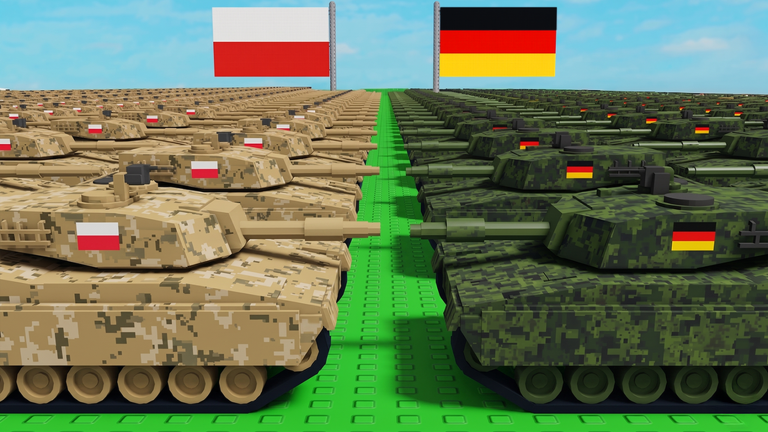
Mini War is created by M&M Community on Roblox. In Mini War, you build your own country, grow your economy through buildings and the Technology Tree, train military units, and compete in PVE and PVP modes. The May 2026 Technology Tree + Alliances update is the current meta.
What is the best starting build order in Mini War Roblox?
Farm, Farm, Oil Refinery, Market or Mine, Power Plant. This opener generates 1,280 income/min for 2,200 unlock cost with payback under 2 minutes. Avoid building Barracks, Radar, Wall, or Turret in the first 5 slots — military-lean openers end 43% behind Farm-heavy openers at the 20-minute mark.
How does the Technology Tree work in Mini War?
The Technology Tree is a multiplier system that boosts your buildings' income/min output. Economy nodes in the Tech Tree add 5 to 12% per node to your baseline income. You need a Power Plant to unlock T3 nodes. Research Lab generates tech tree node points. Focus on economy nodes first — combat tree nodes are secondary until your income/min exceeds 1,500.
What does the Alliance system do in Mini War Roblox?
Alliances in Mini War group up to 4 players and apply shared income bonuses to all member buildings. An active 4-player alliance adds roughly 24% on top of your base income/min. Dead or 1-player alliances add only about 3%. Join an active alliance within your first 30 minutes — it is the single highest-leverage passive bonus in the game.
How often is this Mini War Roblox wiki updated?
This wiki was last refreshed on 2026-05-13 following the May 2026 Technology Tree + Alliances patch. Entries are updated after each Mini War patch from M&M Community and after multi-hour test sessions where building rankings or income values shift.